
India, June 29 --
Morocco's car market has changed, and not just in volume. The type of buyer entering the market has changed. So has the reasoning behind purchases. What was once mostly a necessity-driven transaction has become something more considered, which is either a sign of a maturing market or a sign that people have simply had enough of being sold something that did not suit them. Probably both.
The demand for used cars in Morocco keeps expanding because more people have worked out that a well-chosen pre-owned vehicle often makes more practical sense than a new one at a price point that requires genuine financial strain. That is not a radical insight. What is interesting is that it has become the default thinking rather than the fallback.
A New Generation Of Buyers
Younger buyers approach vehicle ownership differently. Not dramatically differently. Just differently enough to change how the market functions.
A car is not a long-term asset to hold for twenty years. It is a tool that needs to work for a particular period and then be replaceable without a painful financial exit. That framing changes what matters during the purchase. Resale value enters the calculation early. Fuel efficiency matters because it affects the cost of using the thing week to week.
Brand prestige matters less than whether the vehicle will still be easy to service and sell in three years. That shift alone has changed what sellers need to lead with.
These buyers research extensively before approaching anyone. Comparing models, running maintenance cost estimates, reading ownership reviews from actual drivers. By the time they make contact, they already know the approximate market price, they know what documentation to ask for, and they know which questions are worth asking. Sellers who relied on information asymmetry are finding the margins tighter than they used to be.
Mobility Outside The Major Cities
Personal transport has become genuinely necessary across a broader part of the country, not just in Casablanca and Rabat.
Infrastructure improvements and regional economic development have changed daily mobility requirements for a lot of people. Professionals commuting between cities, families covering longer distances for education and family visits, small business owners who need reliable transport that public options simply cannot cover.
The flexibility gap is real. Anyone who has tried to manage a regular intercity commute on public transport alone understands why vehicle ownership has moved from a convenience to something closer to a requirement in many parts of the country.
The market has followed this geographic spread. Mid-range vehicles offering durability and reasonable running costs are selling well across cities that would not have registered strongly on national automotive sales data five years ago.
What Ownership Actually Costs
The sticker price has lost its position as the primary decision factor for a meaningful segment of buyers. Total ownership cost has replaced it. Not completely, not universally, but enough to change how many purchase decisions get made.
Fuel consumption matters for anyone who drives regularly. Maintenance costs, parts availability, insurance, and eventual resale all feed into the same calculation.
A vehicle that looks affordable at purchase can turn expensive quickly if the service costs are high or the parts are hard to source locally. The ones who find this out after signing tend to be the ones who skipped the full calculation beforehand.
The reverse is also true. A slightly higher purchase price can represent better value over three or four years if the vehicle is reliable, economical to run, and holds reasonable market demand. Buyers who run these numbers honestly tend to end up more satisfied. The ones who focus only on the monthly payment figure tend to discover the rest of the cost somewhere between month six and month twelve.
Why Digital Platforms Changed Everything
Most buyers now start online, sometimes months before they are ready to arrange a viewing of anything. This is not unique to Morocco, but its effect on how the market functions here has been significant.
The old dynamic required buyers to rely heavily on local dealer knowledge and word of mouth, which put a significant information advantage on the seller's side. Digital platforms changed that. A buyer can now spend an afternoon comparing twenty vehicles across multiple cities, checking market prices, reading condition descriptions, and reviewing seller history before making first contact.
They arrive at any viewing already knowing whether the asking price is honest. That is a different conversation than the one sellers were having five years ago.
This has raised the bar for what a listing needs to include. Photographs that actually show condition, accurate mileage, ownership history, and service records. A listing without these does not compete seriously with one that provides them. Buyers filter it out before they even get to the description.
What People Are Buying And Why
Purchasing decisions now reflect how people actually live rather than just where they need to go. The distinction matters more than it might seem.
Urban residents want compact cars that park without drama and do not cost much to run day-to-day. Families want SUVs with enough room to carry people and belongings comfortably. Professionals covering serious distances want sedans that handle the journey efficiently.
Business owners want commercial vehicles that get actual work done, full stop.
Domestic tourism has added a dimension that shows up in purchasing decisions more consistently than it did five years ago. More buyers are factoring in the ability to handle road trips to coastal areas, mountain routes, and rural destinations. Morocco's geography rewards vehicles that can do more than city driving, and buyers are noticing that in ways they were not before.
Trust And Documentation
The single factor that most determines whether a transaction proceeds is the buyer's confidence that the information they have been given is accurate. Not the price. Not even the condition. Trust in the information.
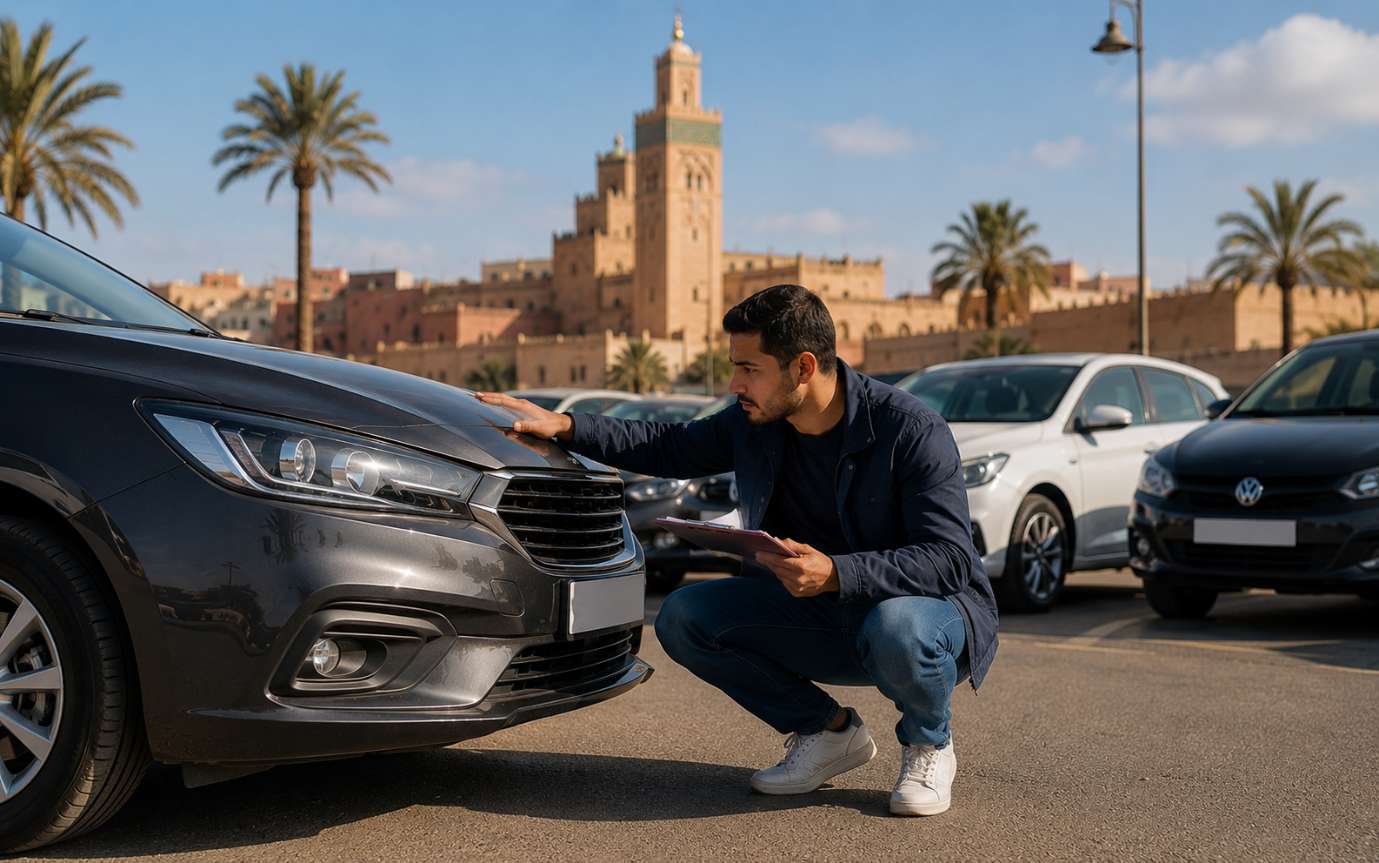
Service records, maintenance histories, ownership papers, and independent inspection results all serve the same function: giving the buyer enough to proceed without feeling they are taking an unreasonable risk.
Anyone who has sat across from a seller who could not produce a coherent service history knows exactly how quickly that erodes confidence. It does not matter how clean the car looks.
Sellers who make documentation available close more transactions. Sellers who resist producing it generate suspicion, sometimes fairly, sometimes not, but the suspicion lands regardless.
Urban Growth And Transportation Demand
Morocco's expanding cities produce new transportation demand at a pace the market continues to absorb.
Growing populations, residential development pushing outward from city centres, expanding economic activity. All of these increase the number of households for whom vehicle ownership makes practical sense.
Longer commutes from outer residential areas strengthen the case for personal transport. Improved roads connecting cities with surrounding regions reinforce it further. These are not sudden changes. They have been building for several years and 2026 has not altered that direction.
On Taking Your Time
Buyers who do well in this market tend not to rush, and the ones who rush tend to regret it.
Vehicle buying involves real trade-offs. Budget, family requirements, fuel efficiency, long-term reliability, resale performance. No single vehicle satisfies all of them. Making reasonable trade-offs requires actually thinking through the competing factors.
Not settling for the first option that roughly works. That sounds obvious. It is apparently not obvious enough, given how many buyers make exactly that mistake.
Buyers who compare properly, test drive before committing, and read documentation carefully rather than scanning it tend to make better purchases. The additional time is real. The difference in outcome is real too.
Casablanca As A Buying Market
The country's largest economic centre maintains conditions that are genuinely good for prepared buyers. High population density, consistent vehicle turnover, and strong business activity keep inventory healthy.
Anyone who has spent time looking cars for sale in Casablanca knows the depth of what is available. Models across a wide price range, from economical city cars to maintained premium vehicles, appear in volume. Competition among sellers in a market that size keeps pricing honest in a way smaller markets cannot always match.
A buyer who has done their research and looked at several options has real leverage before any price discussion starts. That leverage disappears the moment you walk in having looked at only one car.
2026 And Beyond
The market is more transparent than it was, better connected to digital tools, and operating with a buyer base that arrives better prepared. These are not temporary conditions.
Sellers who offer honest records and realistic pricing will attract the buyers worth attracting. The buyers who prepare properly will find the range of options and quality of available information genuinely good.
Morocco's used car market is not perfect. But in 2026, for buyers willing to put in reasonable effort, it is the most workable it has ever been.
Disclaimer: This is a Press Release distributed by HT Syndication. For queries write to contentservices@htdigital.in